
Empowering Reproductive Health:
A FemTech UX/UI Case Study
Overview
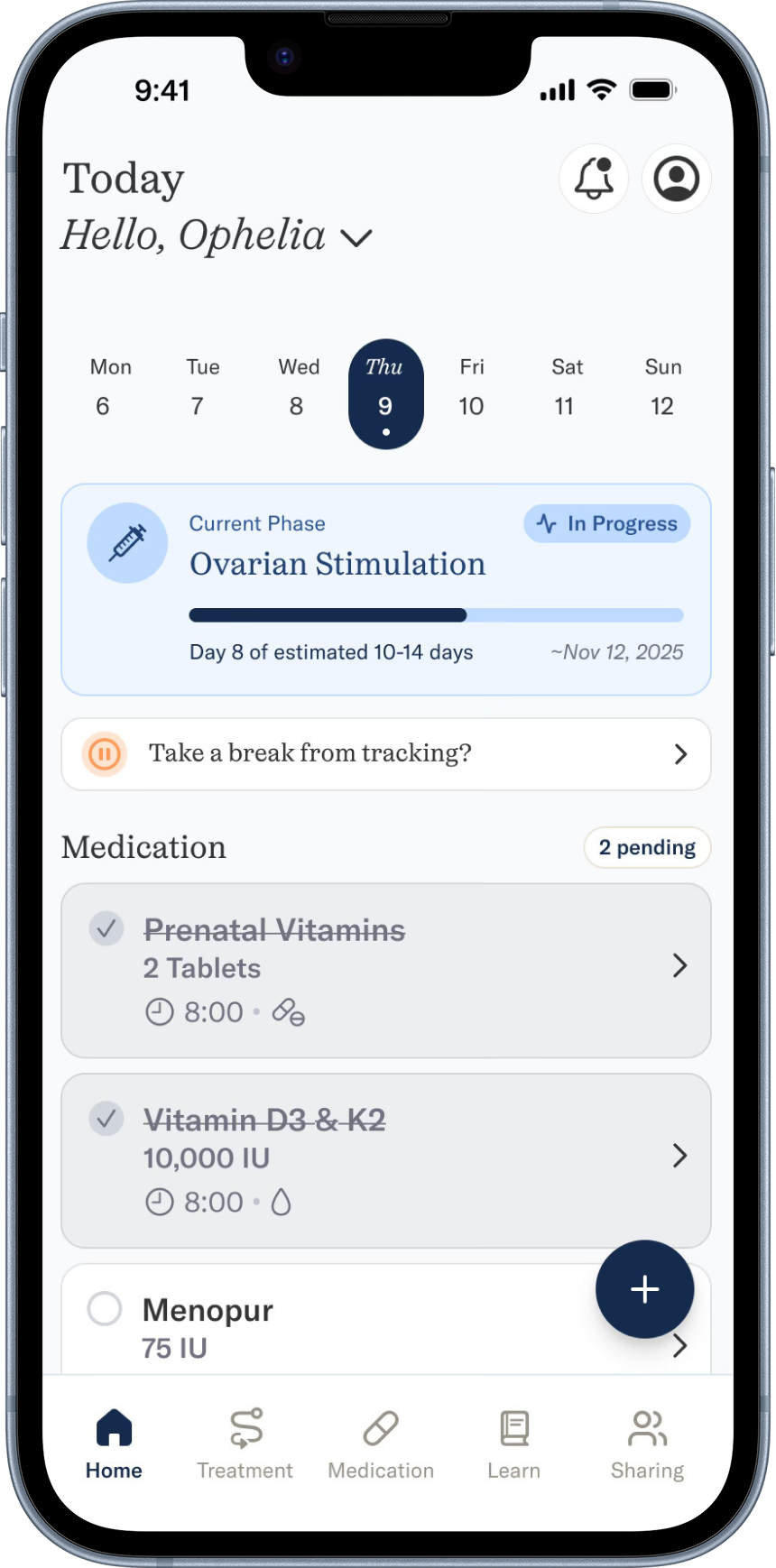
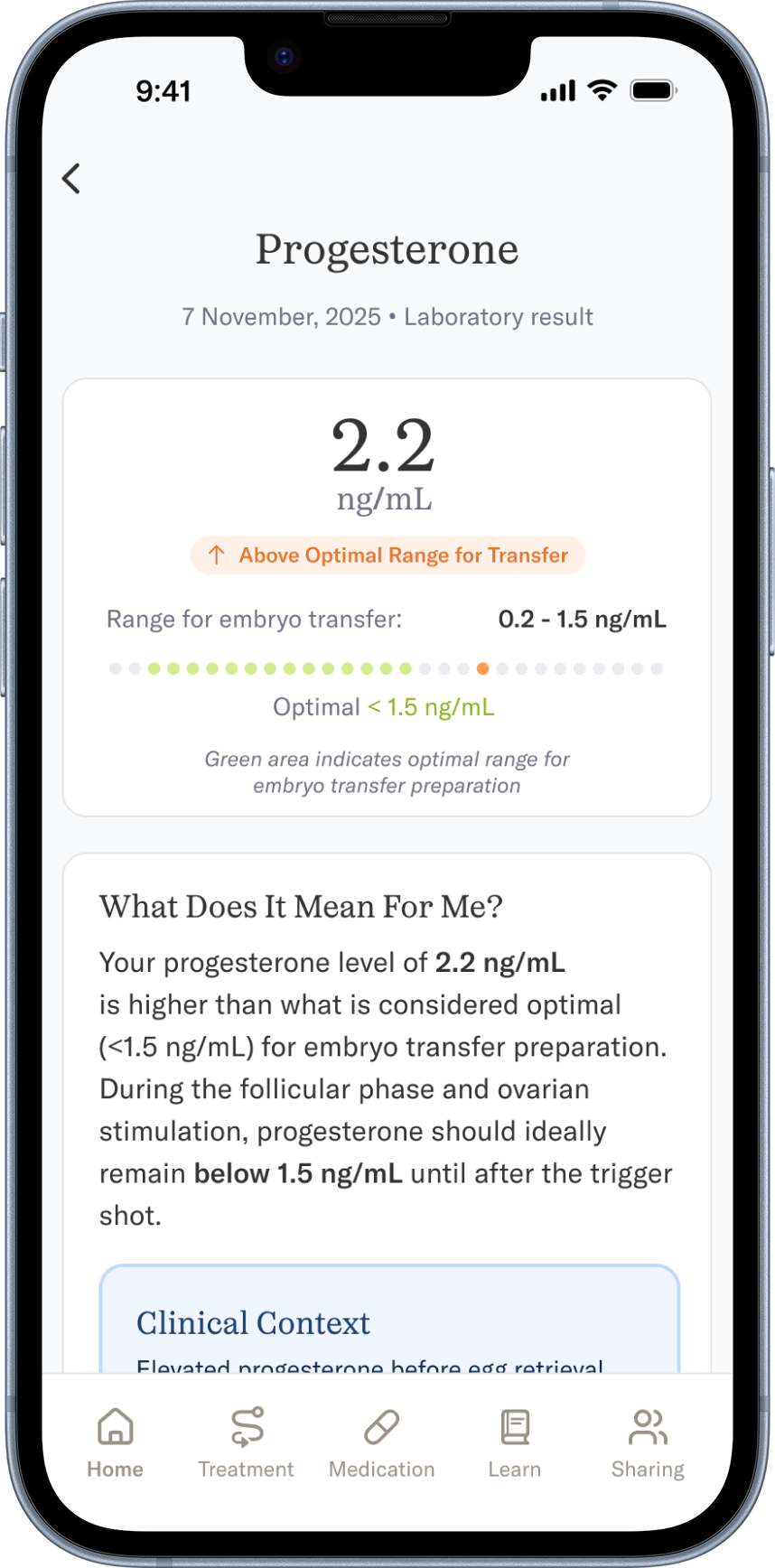
Developed as my Master's thesis, this project explores the profound friction women and couples face when using self-tracking technologies during medically assisted reproduction. My objective was to conduct rigorous academic research and translate those lived experiences into an actionable framework of user-centered design principles. Ultimately, this work aims to shift fertility applications from rigid, quantitative data trackers into empathetic, holistic support systems.
Challenge
Infertility affects 1 in 6 individuals (approx. 282 million people) globally. To achieve pregnancy, many rely on Assisted Reproductive Technologies (ART) like IVF.
However, with a failure rate of roughly 75% per cycle, patients often undergo multiple rounds of treatment, each bringing immense physical, emotional, and financial strain.
Managing a treatment cycle is essentially a second full-time job. Patients must track complex medication schedules, invasive procedures, and clinical data. While they turn to digital mHealth apps for support, they quickly find that existing tools lack empathy, assume a linear path to success, and often exacerbate anxiety rather than relieving it.
Impact
Developed a framework of 6 user-validated design principles to transform mHealth interventions for medically assisted reproduction.
Process
To deeply understand the patient journey, I employed a user-centered design approach structured into three distinct phases:
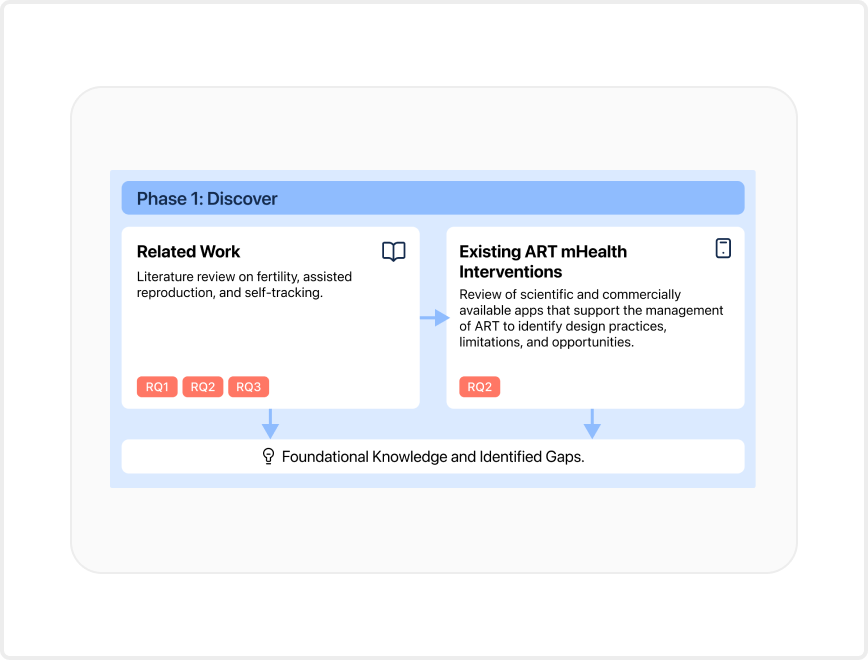
Phase 1 • Discover
Conducted a comprehensive literature review to understand the clinical and psychological context of the problem space. Additionally, I evaluated 10 existing commercial infertility applications. This competitive analysis helped map the current technological landscape and identify critical gaps in user support.
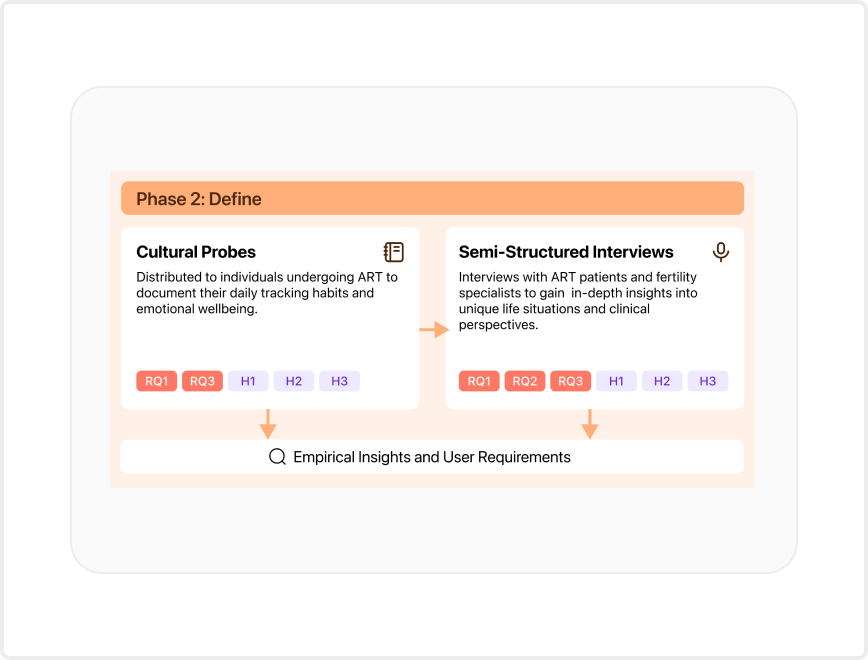
Phase 2 • Define
Deployed targeted cultural probes to document patients' daily tracking habits, routines, and overall emotional wellbeing. This foundational research was followed by in-depth, semi-structured interviews with both fertility patients and medical specialists to capture their authentic, lived experiences and clinical needs.
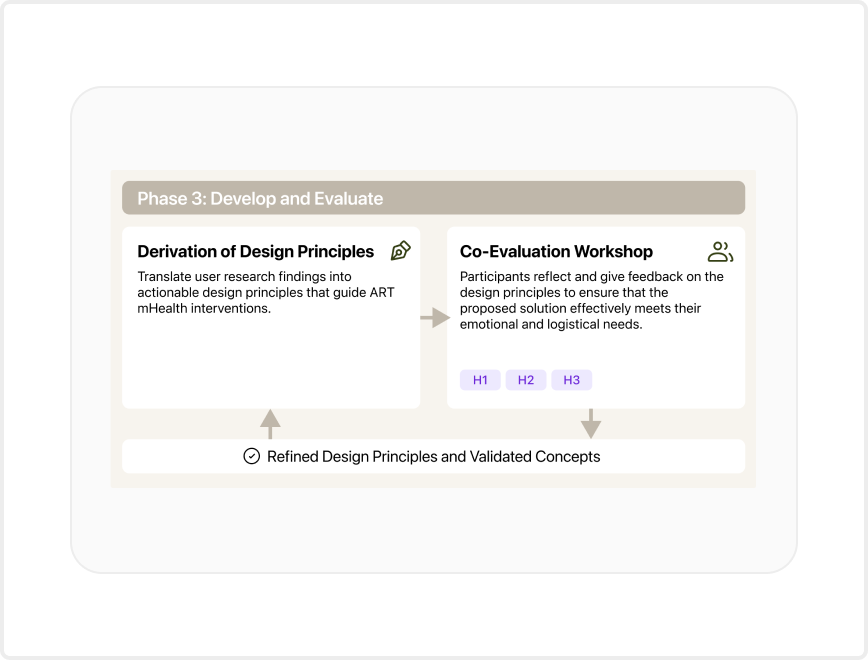
Phase 3 • Develop & Evaluate
Used affinity mapping to cluster data, revealing core needs for reduced cognitive load and emotional safety. Translated these insights into UI mockups, testing them with 5 participants. Feedback refined the final design principles, emphasizing user control, clinical safety, and shared networks.
Solution
The primary outcome of this research is a framework of six user-validated design principles for (in)fertility apps.
Design for the Complex & Non-Linear Nature of Treatment
Most apps assume a straightforward journey to pregnancy. Interfaces must allow users to pause, reset, or adapt their journey without forcing overly optimistic narratives or cheerful notifications after a failed cycle.
Reduce Cognitive Load
Treatment is an administrative nightmare. Apps must act as a centralized hub, integrating medication schedules, appointments, and document storage, reducing logistical complexity rather than adding to it.
Facilitate Knowledge & Understanding
Patients receive raw medical data without context. Apps must provide clear, evidence-based explanations (e.g., using a "subway map" metaphor for treatment pathways) and anticipatory guidance on risks, helping users interpret their progress.
Prioritize User Wellbeing Over Obsessive Tracking
Constant monitoring spikes anxiety. Apps should integrate supportive features (mindfulness tools, breathing exercises) and gentle reminders to step away from the screen, shifting the focus from performance metrics to holistic health.
Support Diverse Life Contexts & Shared Resilience
The logistical burden falls disproportionately on women. Apps must support shared accounts and synced calendars so partners can actively participate, alongside moderated peer spaces to reduce isolation.
Build Trust Through Ethical Data Practices
Fertility data is profoundly personal. Users need granular control to manage, hide, or delete entries. Crucially, logging a miscarriage or failed cycle must immediately halt targeted advertising and insensitive notifications.
Results & Reflection
This research surfaced profound realities about the intersection of technology, reproductive health, and human emotion:
High Information, High Anxiety
While tracking initially offers a sense of control, comparing personal data to standardized app expectations often deeply damages a user's emotional wellbeing.
Toxic Positivity is Harmful
Users overwhelmingly rejected apps that attempted to soften uncertainty through overly optimistic predictions. They demanded transparent, honest communication regarding medical risks.
The "Qualified Self"
Digital technologies cannot solve the biological challenges of infertility, but they can act as vital support systems. When apps ignore emotional realities, self-tracking becomes a central part of the patient's burden.
Conclusion
Future solutions must prioritize context, transparency, and shared responsibility. By integrating male-inclusive design and prioritizing mental health, fertility applications can evolve from rigid data trackers into genuine, empathetic companions.